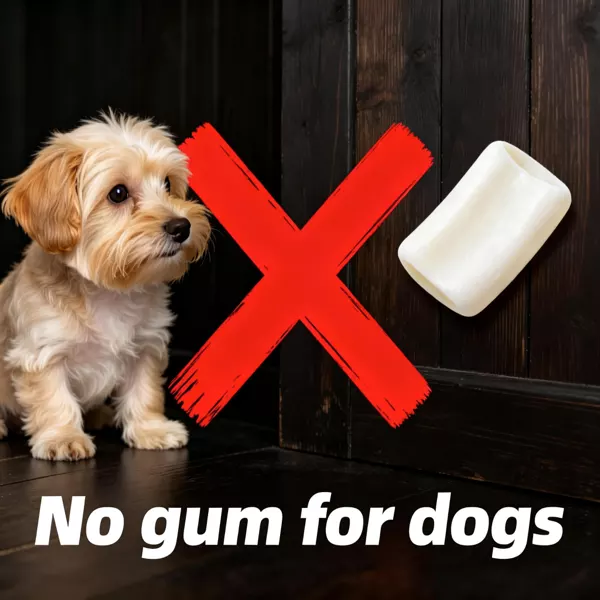
A netizen shared that their dog snuck a few bites of sugar-free gum left on a low table. At first, the dog seemed fine, so the owner didn’t think much of it and went about their day.
But shortly after, the dog started having severe convulsions. Panicked, the owner rushed it to the vet, suspecting the gum was to blame.
Thankfully, the dog had only eaten a small amount and survived after emergency treatment. Many other dogs aren’t so lucky—those that ingest a large quantity rarely make it, even with prompt medical care.
What Is Xylitol, and Why Is Even a Small Amount Dangerous for Dogs?
Xylitol is a natural five-carbon sugar alcohol with a sweetness similar to sucrose but only 60% of the calories. It doesn’t rely on insulin for metabolism and isn’t broken down by oral bacteria, making it a popular sugar substitute in “healthy” foods.
It exists in two forms:
- Naturally occurring: Found in small, negligible amounts in fruits like apples and pears.
- Artificially added: The main source of xylitol in daily diets, added to a wide range of sugar-free and low-sugar products.
😊 Disclosure: If you buy something through my links, I may earn an affiliate commission at no cost to you. I only feature things I truly love here. Thanks for your support.
Common Foods High in Added Xylitol
- Candy & chewing gum (most common): A single piece of sugar-free gum contains about 0.1–1g of xylitol.
- Baked goods: Sugar-free cookies, cakes, low-sugar bread, and egg rolls.
- Dairy products: Sugar-free yogurt, flavored fermented milk, and cheese.
Always check ingredient labels before sharing any human food with your dog—it’s best to avoid these items entirely.
How Xylitol Harms Dogs
Once ingested, xylitol triggers a massive insulin release in dogs, causing blood sugar to drop sharply within 10–60 minutes.
- Small dogs (under 5kg/10lbs) can develop hypoglycemia from just 1–2 pieces of sugar-free gum, with symptoms like lethargy, vomiting, unsteady gait, and convulsions.
- Ingesting over 0.5g of xylitol per kilogram of body weight can lead to irreversible liver failure.
Critical Tip: If your dog eats sugar-free gum or any xylitol-containing product, contact your vet immediately—do not wait for symptoms to appear. Bring the product packaging to help the vet determine the xylitol dosage.
😊 Disclosure: If you buy something through my links, I may earn an affiliate commission at no cost to you. I only feature things I truly love here. Thanks for your support.